


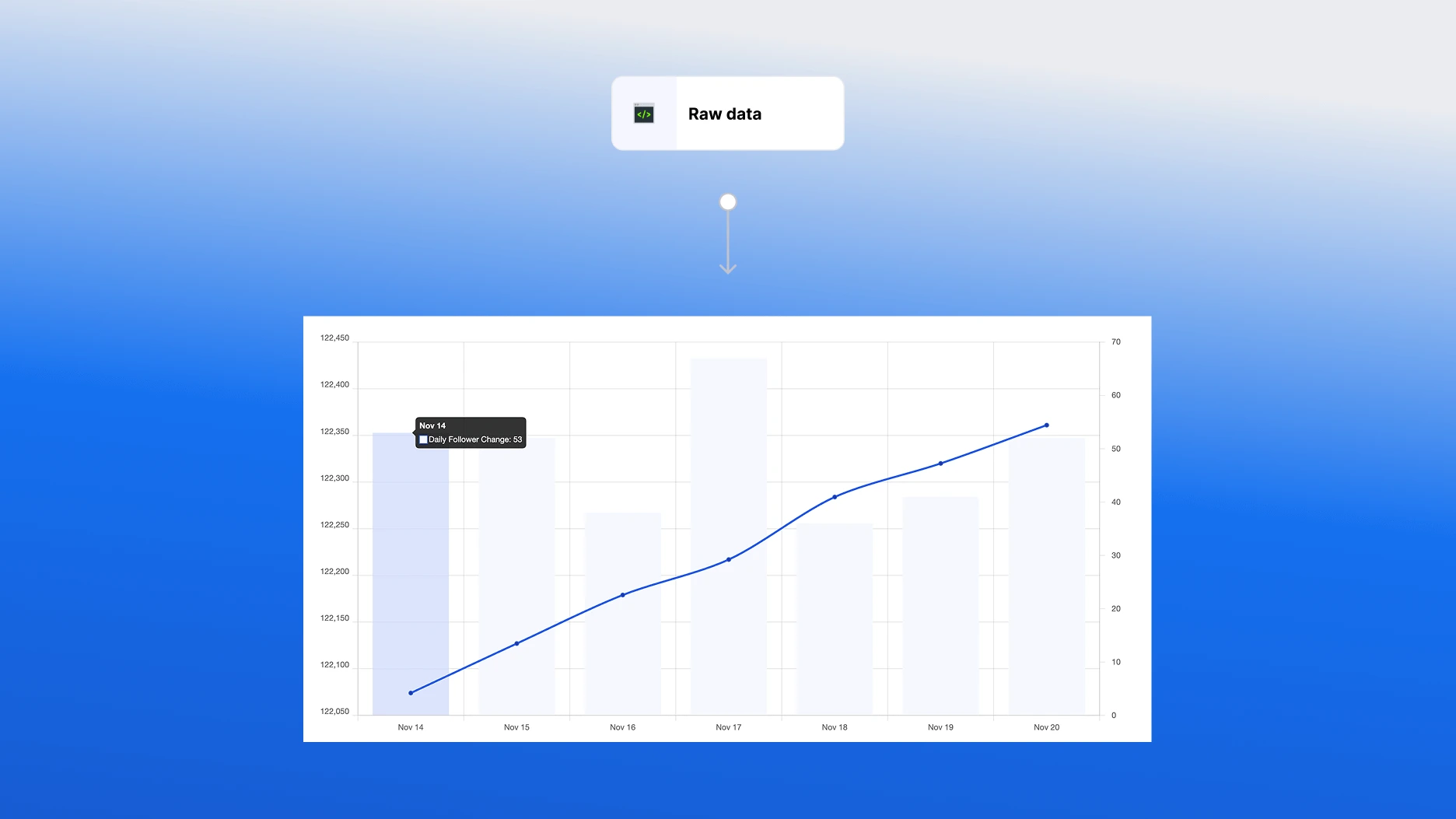
Major.app
Music analytics
40 → 2 hours
of reporting per client each month
The system supported growth from 6 to 186 countries without adding headcount.
We identify one priority workflow, assess its business case, and plan a safe path to production.
You don’t need to prepare a deck or AI plan. We’ll lead the call and agree on the next step.
Founders and leaders who trusted us






%202.svg)
Per month, including AI infrastructure.
One team member moved to customer retention.
Read the case study$5K–$7K
The proposal sets the work and fee. The first call is free. Build and support are separate. You work with the founder and backend architect.
Pilot → decision
A successful pilot can move to production under a separate scope. You decide whether to expand. The contract sets who will run it, how to monitor it, and what support is included.
Hours saved show capacity. These steps show whether they also change costs or revenue.
Compare the same task, volume, and period.
Check for lower spend, an avoided cost, or added income after direct costs.
Include infrastructure, maintenance, and support.
Compare net cash impact with total project cost.
Examples from customer support and investment research.
After 90 days, it resolved 47% of tickets handled by the support team without human help. Median first response fell from 4.2 hours to 8 seconds.
Workflow
The agent can’t issue refunds. It logs each request and sends failures or repeated requests to a person.
The team reported evaluating 12–15 new companies a quarter, up from 4–5. Internal reports showed zero citation errors in the first 60 days.
Workflow
The team makes each investment decision.
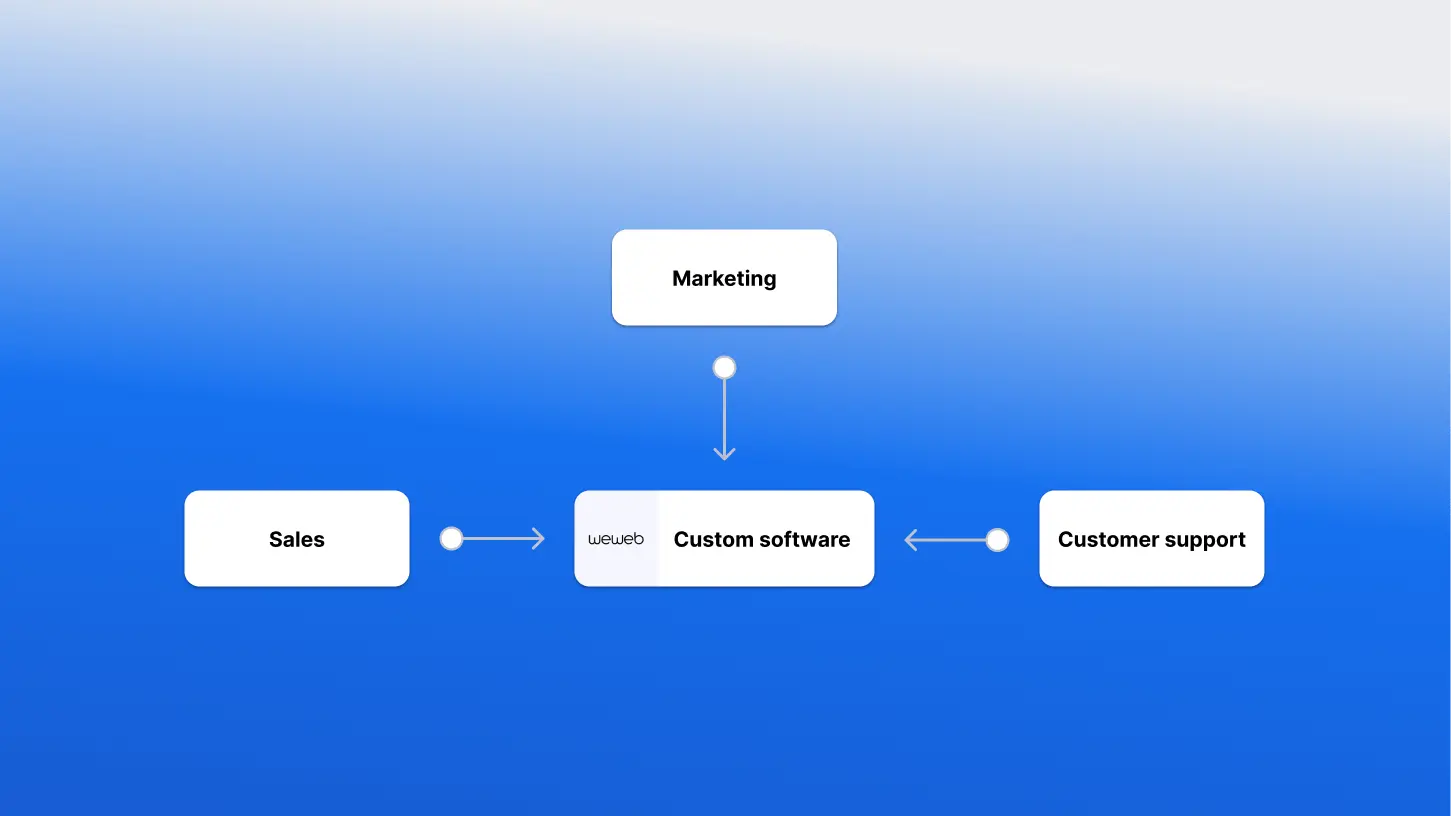
We connect systems and remove manual steps from reporting, order handling, and task tracking.
Music analytics
40 → 2 hours
of reporting per client each month
The system supported growth from 6 to 186 countries without adding headcount.
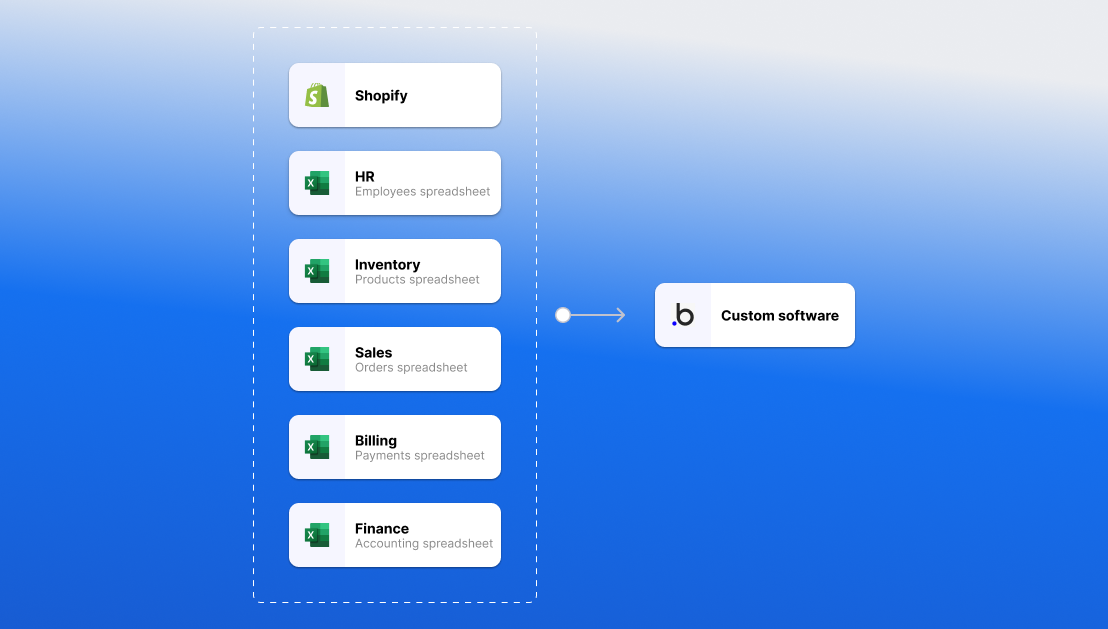
E-commerce operations
44 → 2 hours
of reconciliation each month
The platform processed 62,000 orders in its first 11 months across six disconnected tools.
Internal operations
30% fewer
missed deadlines in the first month
The team mapped 36 tasks across four tools before building its operations workspace.
Blomma spent 44 hours a month reconciling orders across disconnected tools. A shared platform cut that to two hours. PrepLadder mapped 36 tasks across four tools. A shared platform and reminders helped reduce missed deadlines by 30%. These results came from software and workflow changes, not AI.
We check how much work there is, who handles it, what data is available, and whether a person can review or undo errors. We measure time, delays, costs, and user impact before choosing a solution.
Use AI when work depends on language, documents, or changing context. Use a rule, integration, or process change when each input should lead to the same action.
The work repeats, or people move the same information between systems
Start with a rule or integration.
The work depends on language, documents, or exceptions
Consider AI, with human review for important decisions.
No one owns the process, or its value is unclear
Map and simplify it first.
Use these as starting points. Fit depends on volume, data quality, who does the work, the cost of errors, and where a person must review it.
Draft or resolve routine requests and send exceptions to a person
Measures: Response time, safe resolution rate, escalation rate, and cost per case
Find source passages and prepare a cited brief
Measures: Preparation time, citation quality, and useful coverage
Compare records and flag mismatches for review
Measures: Match accuracy, exception rate, and review time
Gather details, prepare a draft, and route unusual cases
Measures: Time to quote, error rate, and conversion or completion rate
Collect updates and prepare a first analysis
Measures: Preparation time, correction rate, and time to a decision
Summarise case records and flag missing evidence for an adjuster
Measures: Review time, missing-document requests, and escalation rate
Compare incoming quotes with a request and flag gaps for a buyer
Measures: Review time, discrepancy rate, and exception load
Find approved work instructions and prepare an issue summary for a supervisor
Measures: Evidence lookup time, correction rate, and repeat issues
Summarise shipment updates and flag delayed or incomplete cases for an operator
Measures: Time to update, unresolved exceptions, and repeat contacts
Prepare a source-linked client brief from approved records for adviser review
Measures: Preparation time, corrections, and source completeness
If you have a problem but no workflow yet, start with the AI readiness audit.
Bring the person who knows the process and someone who can approve a change. A rough measure of volume, time, cost, delays, or errors helps us assess it. We can start with a process description and sample records without sensitive data. You don't need production access for the call.
Before design, involve someone from IT or security. They can confirm which systems and data we can use, how to test them, and who can approve changes. If no one can explain the process or its rules, we'll map it before adding AI.
Explains the steps and reviews exceptions.
Sets the goal and decides what happens next.
Checks which systems and data we can use.
If the pilot meets its target, we plan a separate release. The plan says who will run it, how to monitor it, and what support is included.
Measure quality, use, cost, and value against the agreed baseline.
Stop, adjust the workflow, or scope production.
Agree who will run the system, how to monitor it, and what support is included.
Before the pilot, name the person who will run the process, how you'll track it, and where problems go. If the system misses its target, revise it or stop.
Set the pilot measures before testing: quality, cases completed without help, exceptions, rework, cost per case, and user feedback. Keep human approval for high-impact actions.
Workflow, person responsible, baseline, and business goal
Solution choice, system and data map, access, and exception route
Everyday and edge cases, review points, and a pass mark
Results, user feedback, running cost, and open risks
Owner, instructions, access list, monitoring, and rollback steps
Plan how each system will connect, how much data it can handle, how to test it, and where records will live. If we can’t test a connection safely, we leave it out of the first release.
After release, track use, exceptions, time per task, running cost, and the agreed result. Give the person running it a way to report problems and pause the system. Compare results with the baseline at agreed reviews. If use falls or exceptions rise, fix the process before adding more.
Show users what the system can do, when they need to step in, and how to report a problem. Use pilot feedback to update the workflow and instructions. Expand when quality, user results, exceptions, and cost meet the agreed limits. Keep a manual route for urgent work.
Set what AI can read or change, when a person must approve, and who can stop it.
Customer support · refund request
AI drafts. Customer decides.
For a refund, it prepares the request and waits for customer approval.
Five checks before launch
Access
Limit what it can read or change to what the job needs.
Actions
Require approval for refunds and other important actions. Keep a record.
Answers
Test everyday and tricky cases, including when it should say it doesn’t know. Set a pass mark.
Failures
Log actions, set alerts, and name who can pause or undo a change.
Ongoing care
Name who will manage the accounts, code, data, instructions, and support after launch.
Set what data each system can read, where it can go, and who can change or delete it. The family-office tool used the client’s infrastructure and API account. Dinsko’s agent waited for customer approval before sending refund requests.
NocodeAssistant is a two-person AI consulting agency. Himanshu Sharma founded it and leads development. Arpita Gupta is the backend architect. Both join the first call and work with you through the engagement.
Before a pilot, we agree who will run the process, who will review exceptions, and who will decide whether to continue. Someone from IT or security checks access to systems and data.
Focused consulting engagement
$5,000–$7,000
USD · approximate range
Set in the proposal
The free 30-minute call defines scope. It doesn't include a written assessment. A focused engagement typically costs $5,000–$7,000 USD. The proposal sets deliverables, project lead, timeline, and fixed fee. Price depends on integrations, data access, approvals, testing, interface work, and support.
Paid work can include a workflow map, business case, solution recommendation, system design, controls, tests, pilot review, or production plan. The proposal lists the agreed items, your inputs, and exclusions.
Build pricing is separate from consulting. See AI agent development or AI automation for build scope and pricing.
Select the situation that sounds like yours.
AI consulting services can include choosing a workflow, measuring its current cost or time, deciding whether software or AI fits, planning safeguards, testing the system, and guiding a pilot. The proposal lists the work.
An AI strategy consultant helps decide where AI fits across a company. An AI implementation consultant takes one workflow from business case to design, testing, and release.
A focused engagement typically costs $5,000–$7,000 USD. The proposal sets the scope, deliverables, person responsible, timeline, client inputs, exclusions, and fixed fee. Build and ongoing support are separate.
Yes. Before quoting, we check access, APIs, rate limits, data routes, and test environments. Examples include a support workflow connected to an order system and three carrier services, and a research tool that searches SEC filings.
For each project, we set what data the system can use, where it can go, and who can change or delete it. Your IT or security contact checks access and data routes. Keep high-impact actions behind human approval, and agree how to review logs and pause or roll back the system.
A change to the model, prompt, connection, or data can change results. Agree who approves changes and which tests must run again. Keep the test results with the release record, and track quality and cost. Pause or roll back the system if it misses the agreed target. Ongoing monitoring and fixes must be part of the support agreement.
A separate AI agent build includes 30 days of monitoring and fixes. The contract sets ongoing support, response times, escalation, and uptime targets.
Our AI cases cover e-commerce support and family-office research. Other projects cover education, music analytics, and flower retail. We can assess your workflow based on its systems, data, and the cost of errors.
Yes. Dinsko has more than 80 employees and handles about 4,200 support tickets a month with three agents. After 90 days, the system resolved 47% of support-team tickets without a person. Monthly support-team cost fell from €14,200 to €9,200, including AI costs. One team member moved to customer retention.
Hours saved show added capacity. They reduce costs only when spend falls, a planned cost is avoided, or extra work earns more than its direct costs. We measure those effects separately.
We revise the workflow and test again if it is still worth pursuing. If not, we stop.
If the pilot succeeds, we plan a separate release. The plan says who will run it, how to monitor it, and what support is included. You decide whether to expand.
No. Consulting covers the workflow, business case, controls, tests, and route to launch. A build has a separate scope and price. You can choose another builder or stop after the consulting work.
See if this is a fit
Tell us how the work runs now, where it slows down, and what result you need. Bring a baseline if you have one. We’ll assess fit and agree on the next step.



We'll cover
Sometimes that leads to working together.
Sometimes it doesn't.
Either way, the aim is clarity.