Every business starts the same way. You sign up for a handful of tools. A CRM here. A project tracker there. A shared Google Sheet that someone on your team built in a weekend. And it works for a while.
Then your team doubles. Your processes get more complex. And suddenly, that software you picked two years ago starts fighting you instead of helping you. You spend more time working around your tools than working with them.
I’ve run a software agency for seven years. The companies that reach out to us almost never say, “We need custom software.” They say “nothing we use does what we actually need it to do.” By the time they call, they’ve been dealing with broken workflows for months, sometimes years.
Here are seven signs that you’re at that point. And more useful, what to do about it.
Your team copies data between apps more than once a day
This is the most common one. Someone on your team exports a CSV from one tool, cleans it up, and imports it into another. Every single day.
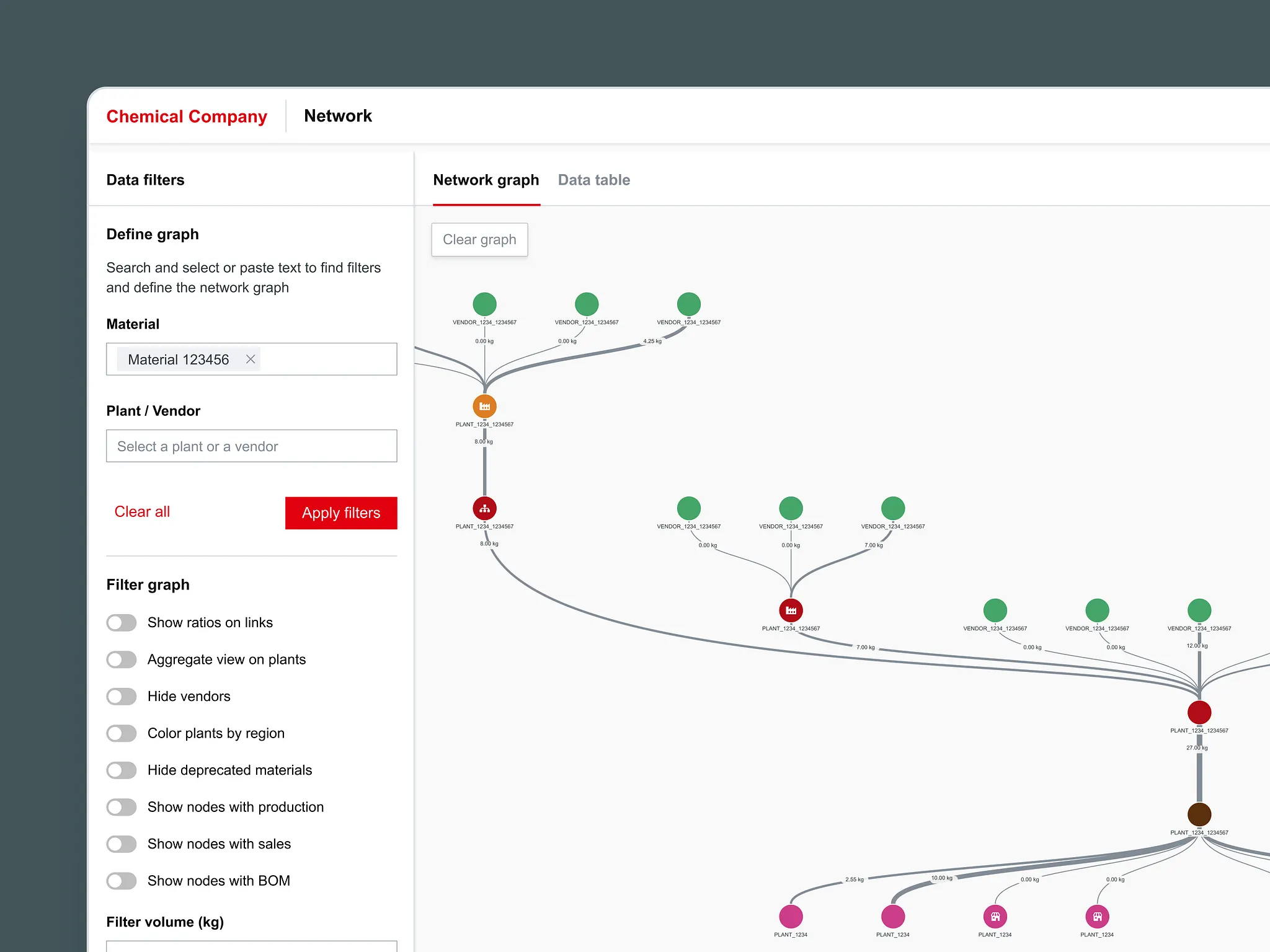
When we started working with PrepLadder, an education company with over 5 million users on their app, we ran workshops with their teams to map out how they actually worked. We found data scattered across four different tools. Sales had one system. Support had another. Marketing had a third. And the leadership team had a dashboard that pulled from none of them.
We counted 36 separate tasks that existed only because these systems didn’t talk to each other. Thirty-six. Things like manually copying lead data from one app to another, or re-entering customer information that already existed elsewhere in the company.
If someone on your team spends even 30 minutes a day on data entry, that’s really moving information between tools; multiply that by 20 working days. That’s over 10 hours per person per month. For a team of five, you’re burning 50 hours a month on work that software should handle automatically.
You’ve worked around the software so many times that the workaround IS the process
This one sneaks up on you. You hit a limitation in your tool, so you create a workaround. A shared spreadsheet. A Slack reminder. A sticky note system (yes, I’ve seen this at companies doing $10M in revenue). Then someone creates a workaround for the workaround.
A year later, your process documentation looks like a conspiracy theory board. New hires need two weeks to understand how things actually get done versus how they’re supposed to. If that sounds familiar, it might be time to think about which processes are worth automating.
There’s a weird psychological thing that happens here. Because the workarounds developed slowly over time, nobody questions them. They just become “how we do things.” I talked to a wholesale distributor last year who had a 14-step process to fulfil a single order. When we mapped it out together, eight of those steps existed only because their inventory system couldn’t handle their actual product categories. They’d been living with that technical debt for three years. Manufacturers face this constantly, and the instinct is usually to buy an ERP. That instinct is usually wrong.
Off-the-shelf tools are built for the average company. If your processes have evolved to the point where you have more exceptions than rules, the tool isn’t the problem. The fit is.
Your reporting takes hours because the data lives in five places
This is the one that drives COOs and CEOs crazy. You want to know something simple. How many orders were shipped this week? What’s our customer retention rate? Which sales rep is closing the most?
The answer should take 30 seconds. Instead, it takes someone half a day because the data is split across your CRM, your project management tool, your billing system, and two spreadsheets that only one person on your team understands.
At PrepLadder, the marketing team couldn’t see how their campaigns connected to actual lead conversions without pulling data from three different places and manually stitching it together. By the time they had the numbers, the data was already old. They were making decisions based on last week’s reality, not today’s.
You’re paying for features you don’t use and missing the one feature you actually need
Most off-the-shelf tools are built with 100 features. You use 12 of them. But the one thing you really need, the specific workflow that matches how your business actually operates, that doesn’t exist. No amount of Zapier integrations or API hacks will fix it.
This is especially common in growing companies. Back when you were a 10-person team, that tool made sense. Now you’re at 40. The way you handle orders, approvals, or customer requests has changed completely. But the software hasn’t changed with you.
I’m not saying every SaaS product is bad. They’re great until they’re not. The tipping point is when you start bending your process to fit the tool instead of the other way around.
Here’s a quick test. Ask your team: “If you could change one thing about how our software works, what would it be?” If every person gives you a different answer, and none of those things are on the vendor’s roadmap, you’re past the tipping point. You’re paying a monthly subscription for software that solves someone else’s problem.
Only one person knows how the system actually works
This is the scariest sign on this list. And if your team has grown past 30 or 40 people, you’ve probably already felt it. (We wrote a whole post about why internal tools break at 50 employees.) You have a team member who’s become the unofficial system admin. They know all the workarounds. They built the complex spreadsheet. They remember which Zapier automation triggers which action.
If that person goes on vacation, things slow down. If they leave the company, things break.
I see this so often that it’s become one of the first questions I ask on calls: “Is there one person who keeps everything running?” The answer is almost always yes, and a nervous laugh almost always follows it. Everyone knows it’s a problem. Nobody’s fixed it because fixing it means rethinking the entire system, and who has time for that when you’re busy growing?
That’s not a people problem. That’s a systems problem. When your tools require tribal knowledge to operate, you don’t have a real system. You have a fragile arrangement held together by one person’s memory.
New hires take forever to get productive
Onboarding shouldn’t require a 40-page manual explaining how to use six different tools and three spreadsheets to do a basic task. But at companies that’ve outgrown their software, that’s exactly what happens.
I’ve seen onboarding documents that include instructions like “ignore the error message on step 3, it always does that” or “this field says ‘region’ but we actually use it for customer type.” When your training materials include disclaimers about your own tools, something’s gone wrong.
The cost is real. Every extra week a new hire takes to become productive is a week of salary with reduced output, for a company hiring 5 to 10 people a year, that adds up fast.
You’ve evaluated (and rejected) every tool on the market
The research is done. The demos are sat through. The comparison posts are read. You’ve tried three different project management tools, two CRMs, and that industry-specific software that looked promising but was built in 2014 and never updated.
Nothing fits.
This is actually a good sign, even though it doesn’t feel like one. It means you understand your business well enough to know that a generic tool won’t solve your specific problem. Most companies aren’t at that level of clarity. The fact that you’ve eliminated the obvious options means you’re ready for something built around how your business actually works.
So what do you do about it?
There are three options. You can keep patching things with more workarounds and hope it holds. You can hire a developer (and spend 3 to 6 months figuring out if they’re the right fit). Or you can work with a team that’s done this before.
When PrepLadder came to us, they didn’t need a massive enterprise system. They needed one platform where Sales could see leads in real time, Support could pull up customer history without switching tabs, and Marketing could track campaign performance without spending half a day on a report. We built that in about 8 weeks. Their teams went from working across four disconnected tools to one dashboard built around how they actually operate. (Read the complete PrepLadder case study.)
We ran a similar exercise for Blomma — a seasonal e-commerce brand running vendor ops across four disconnected tools. Read the Blomma case study →
That’s what this looks like in practice. Not a giant IT transformation. Not a two-year project with a six-figure price tag. Just software that matches your business instead of fighting it.
Most of the companies we work with are in the $3M to $30M range. Big enough that broken tools cost real money, small enough that they don’t have an internal engineering team to fix things. That’s the sweet spot where custom internal tools make the most financial sense. Below that, off-the-shelf usually works fine. Above that, you already have a CTO handling this.
I know this is the part where most blogs tell you to “schedule a call” and leave it at that. So I’ll be direct about what that call actually is. It’s 30 minutes. We talk about what’s broken, what you’ve tried, and whether building something custom makes sense for your situation. Sometimes it doesn’t, and I’ll tell you that. No pitch deck. No pressure.
Still copy-pasting between tools because none of them talk to each other?
That's the gap we build for. A 30-minute call is enough to figure out whether a custom tool makes financial sense for your situation — and we'll tell you if it doesn't.
Himanshu runs NocodeAssistant, a development agency that builds internal tools and SaaS products for growing companies. He's worked directly with every client since 2019. Same person from kickoff to post-launch.
SAP and NetSuite are built for companies ten times your size. Here's why a $12,000 custom tool fixes more than a $150,000 ERP, and how to know which one you actually need.