You’ve decided to hire a software agency to build your internal tool or SaaS product. The contract is close to being signed, or already signed. Now the question that actually matters: how do you work with them to get a good outcome?
Most software projects go wrong not because the agency can’t build. They go wrong because the working relationship isn’t set up right from the start. The brief is vague. The client disappears for two weeks mid-build. The scope expands every Friday. The handover gets skipped.
I run a small software agency. We’ve been building internal tools and SaaS products for seven years. What follows is a direct guide: what to expect from your agency, how to set up the relationship so the project is delivered, and where working with a small agency differs from a large one.
You talk to the person who builds your software
At a big agency, the person on your sales call is not the person who builds your product. You talk to an account manager. They talk to a project manager. The project manager talks to a developer. Your requirements pass through two or three people, and details get lost at every handoff.
When a wholesale distributor came to us with an inventory tracking problem, I was on the discovery call, and I was going through their spreadsheet the same week.
When the client said they needed to see quantity by warehouse, not just total quantity, that went straight into the project scope. No ticket. No two week wait.
If fewer people are involved in the process, there are fewer opportunities for misunderstandings, which helps keep everything on track.
The timeline is faster (usually)
Big agencies have processes. Intake forms. Kickoff meetings. Sprint planning. Backlog prioritisation. Status updates. Retrospectives. All of that exists for good reason when you have 15 developers working on different parts of a project.
When you have a small team, most of that overhead disappears.
We typically go from signed contract to working prototype in two weeks. Full delivery in four to eight weeks. A comparable project at a larger agency takes 12 to 16 weeks because of the coordination overhead, not because the work itself takes longer.
One education company came to us after getting a 14 week estimate from a larger software agency. We delivered in five weeks.
The scope was identical. The difference was that we didn’t have three layers of Project Managers between the client and the code.
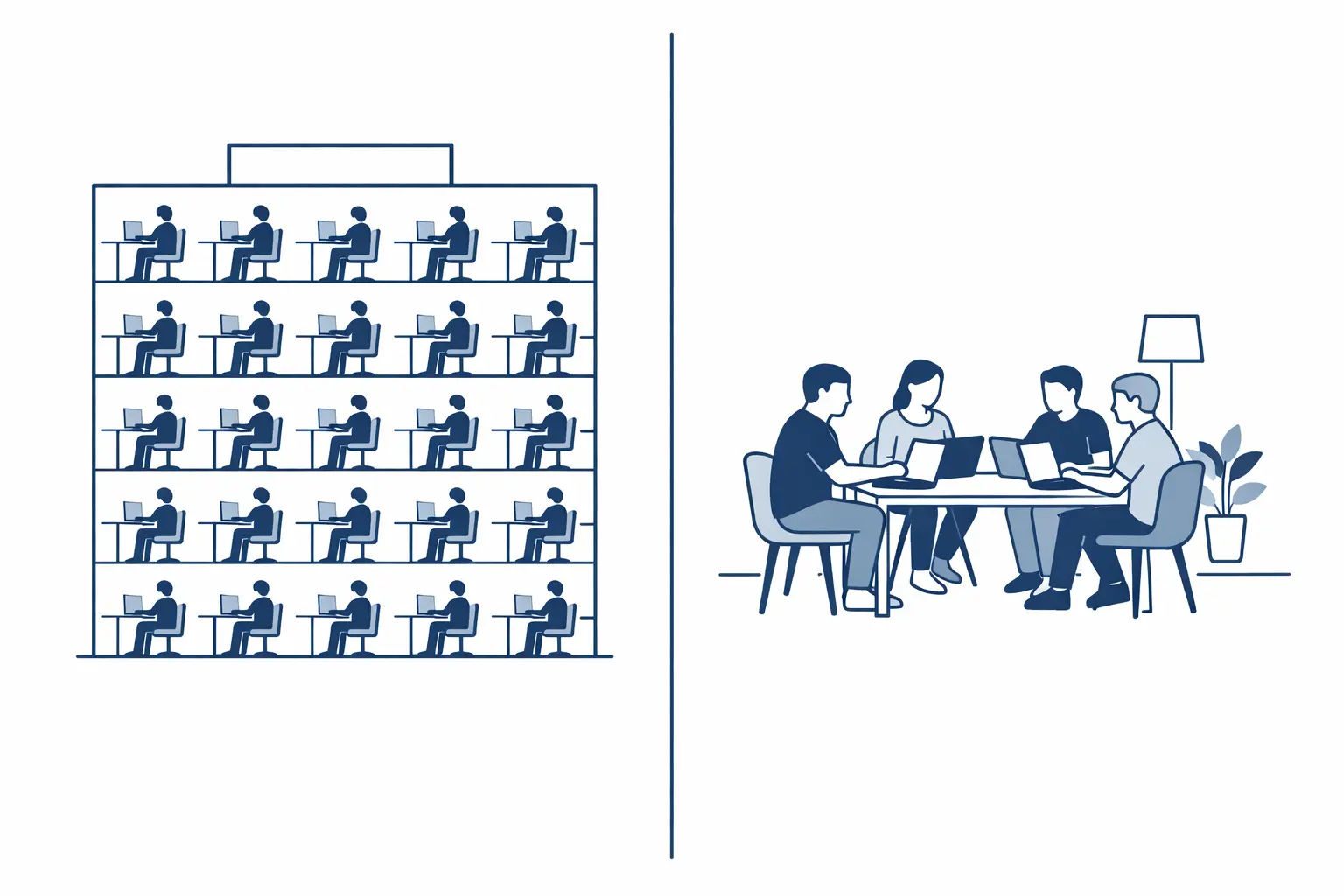
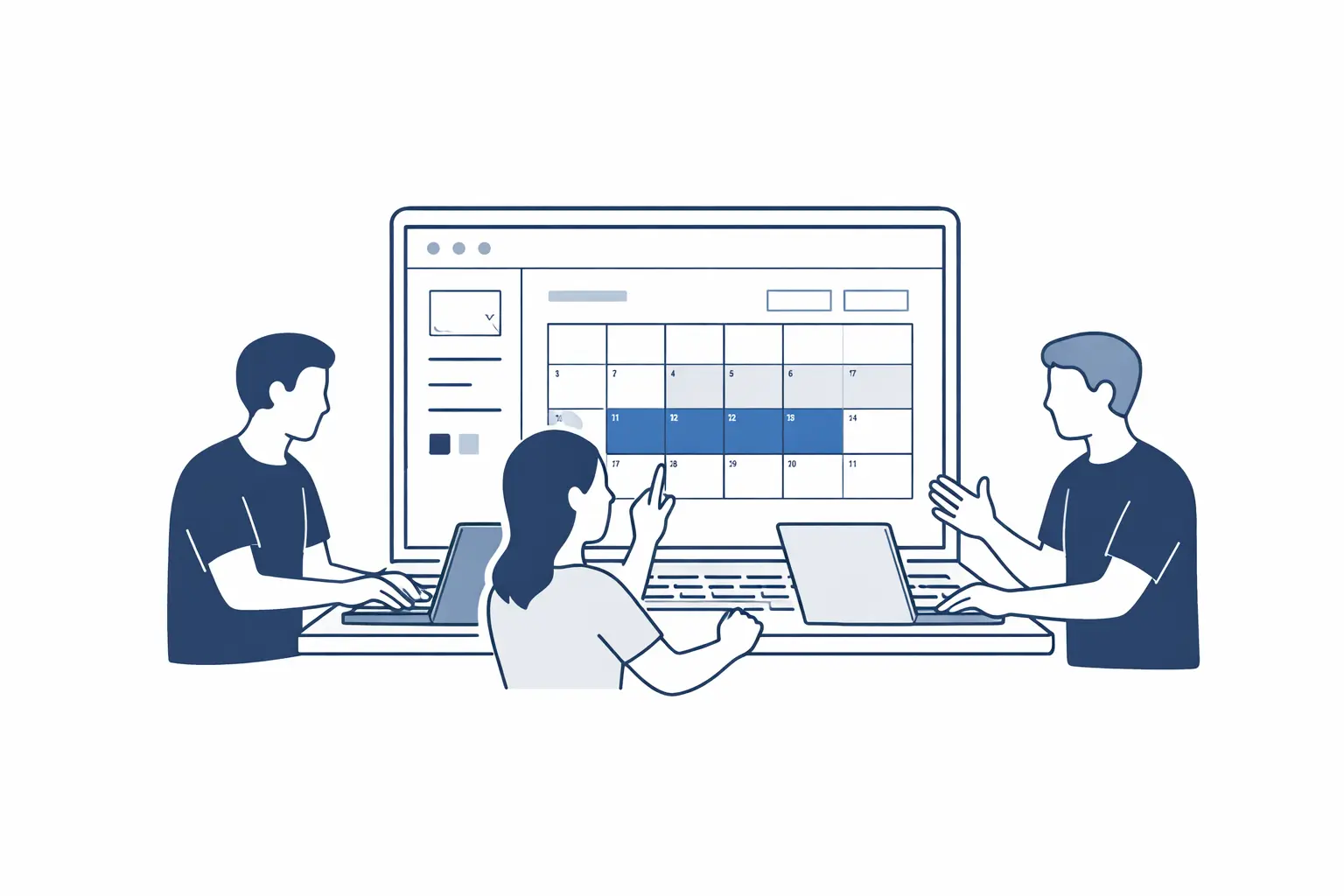
That said, a small team can only work on a limited number of projects at once. If we’re booked, you wait. A bigger agency can start sooner because it has more people to throw at it.
So faster comes with an asterisk. Faster once we start, but the start date depends on availability.
You get honest opinions, not safe ones
Big software agencies are optimised for client retention. They want the contract renewed. They may hesitate to tell you that your idea might not work, that you could be doing too much, or that the feature will cost $15,000 and only be used a couple of times.
A small agency doesn’t have a sales quota to protect. I’ve talked clients out of building things. More than once.
A field services company wanted us to build a custom scheduling system from scratch. After looking at their actual workflow, I told them to use Calendly for scheduling and let us build the job tracking and reporting tool instead. That saved them about $20K and got them to a working product three weeks sooner.
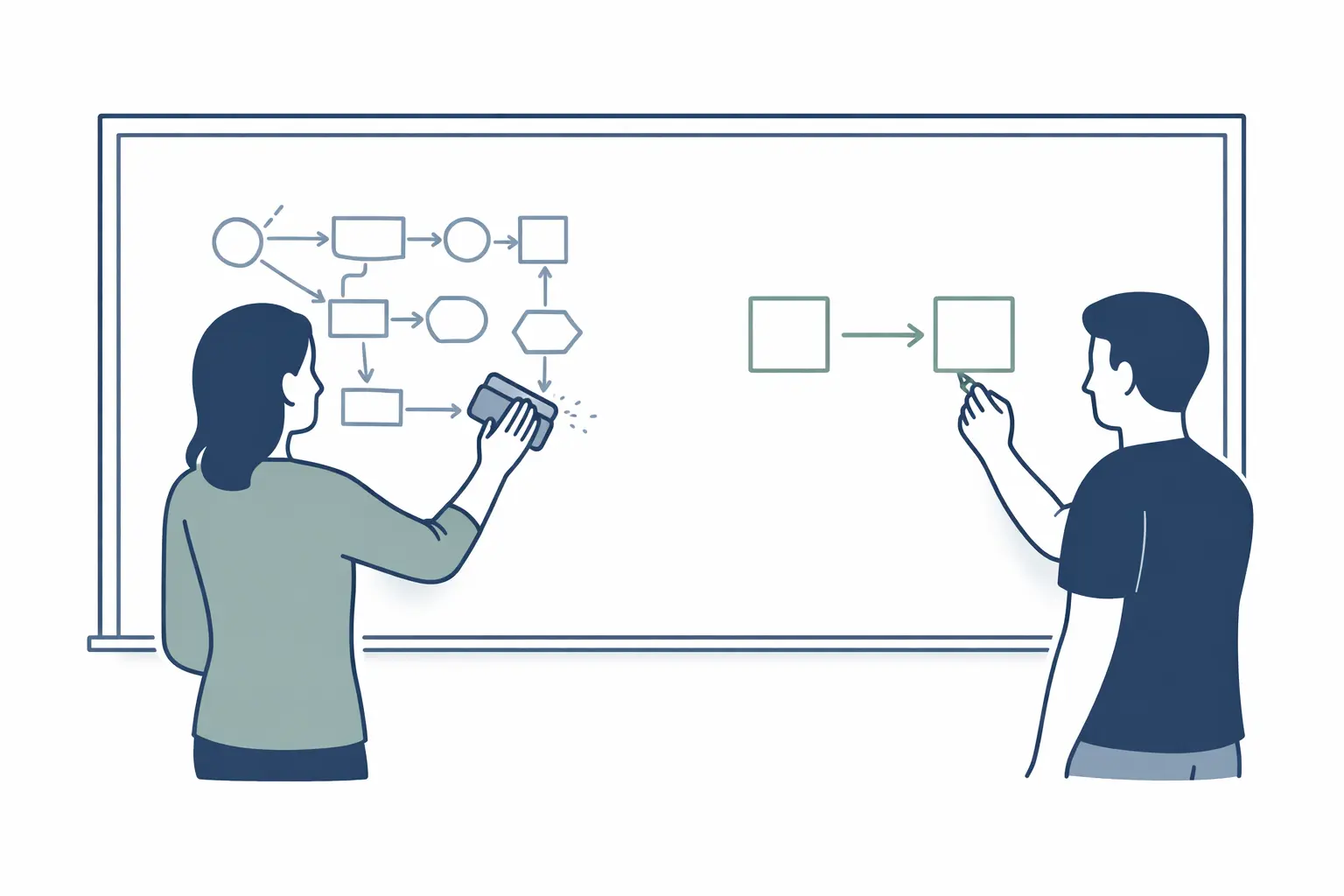
This sounds like I’m selling you something by saying I don’t sell you things. But a small agency’s reputation depends on projects that actually work. Every client matters. We can’t afford to deliver something that collects dust because we were too polite to push back during planning.
You won’t get a junior developer learning on your project
At a large agency, the senior developer designs the system, and then a junior developer builds most of it. The senior person checks in periodically. If you’re lucky, they review the code before it ships. If you’re not, they’ve already moved on to the next sales call.
At a small agency, there’s nowhere to hide junior work. Every person on the team is building production software every day. The person who designs your system is also the one who builds it.
If your project needs something beyond our core expertise, we’ll let you know. We’ve referred projects to other teams when the fit wasn’t right. That’s a luxury big agencies don’t have because their business model requires them to say yes to everything.
Communication is direct, sometimes too direct
You will not get polished weekly status reports with green/yellow/red indicators and carefully worded updates that make everything sound on track.
You’ll get a Slack message that says, “The API from your accounting system is returning garbage data. Here’s a screenshot. Can you check with your provider?” You’ll get a Loom video walking through the build in progress. You’ll get an honest answer when something is taking longer than expected, and why.
Some clients want to know exactly what’s happening and talk to the person doing the work. Other clients want the polished experience.
If you want a polished report, a small agency is not the right fit. We’re not going to add a project manager to make the communication feel more professional. That project manager’s salary ends up in your invoice, and they don’t write a single line of code.
Big agencies charge $150 to $300 per hour. They need to because they’re covering account managers, project managers, office space, sales teams, and marketing budgets. When you pay a big agency $80K for a project, $30K of that goes to the people actually building your software.
Small agencies have less overhead. We charge fixed project prices. Most of our projects fall in the $8K to $50K range. A larger portion of what you pay goes directly into building your product.
But cheaper doesn’t mean cheap. If someone quotes you $3K for a custom internal tool, they’re either building something from a template that won’t fit your needs, or they’re going to hit you with change orders that triple the cost. We’ve written about what actually affects the cost of these projects if you want the full breakdown.
What happens after launch
Big agencies often have dedicated support teams. You get a ticketing system, SLAs, and guaranteed response times.
Small agencies handle support differently. We offer a monthly retainer for ongoing maintenance and support. You message us directly when something needs fixing or changing. Response times are fast because you’re not in a queue behind 30 other clients. But we also don’t have a 24/7 support desk. If something breaks at 2 AM on a Sunday, you’re waiting until Monday morning.
For most internal tools and SaaS products, that’s fine. These aren’t hospital systems. A few hours of downtime on a weekend won’t sink your business. But if you need true round-the-clock support, that’s a point in favour of a larger agency.
Questions to ask before you hire any agency
Whether you go small or big, ask these before you sign anything.
Who exactly will be building my software?
Not the company. The actual people. Ask to meet them.
What happens if the project takes longer than estimated?
Get this in writing. Scope creep happens, and someone needs to own the costs.
Can I see something working within the first two weeks?
If the answer is no, ask why. Two weeks is enough time to have a prototype or at least a working data model.
What does support look like after launch, and what does it cost?
Don’t assume this is included. It usually isn’t, at any size agency.
Can I talk to a recent client?
Not a testimonial on the website. An actual person you can call. Check our case studies for the kind of work we do, but also ask for a reference you can speak with directly.
Conclusion
A small agency is not better than a big agency. It’s different. You get more direct access, faster turnaround, and lower overhead costs. You give up depth of bench, polished processes, and round-the-clock support infrastructure.
For a 25-person company that needs a $30K internal tool built in six weeks, a small agency is almost always the better fit. For a 500-person company that needs an enterprise platform with 14 integrations and a dedicated support team, it’s not.
Most of the companies we work with fall in that first category. If yours does too, you can see what we’ve built and decide for yourself.
What’s the main difference between a small and large software agency?
With a small agency, you talk directly to the person building your software. There are no account managers or project managers between you and the developer. With a large agency, details get filtered through multiple layers before they reach the builder. The tradeoff is that small agencies have less bench depth and no 24/7 support infrastructure.
Are small software agencies less reliable than large ones?
Not inherently. Small agencies have stronger incentives to deliver. Their reputation depends on every project they take on. They can’t hide a failed project behind portfolio volume. The risk with small agencies is capacity: if they’re booked, you wait. Large agencies can start sooner because they have more people available.
How much does a small software agency typically charge?
Most small agencies work on fixed project prices in the $8,000-$50,000 range for typical internal tools and SaaS products. Large agencies bill $150-$300/hour, meaning an $80,000 contract might put only $30,000 toward actual building once overhead is covered. Small agencies have lower overhead so more of what you pay goes toward the work.
How quickly can a small agency deliver compared to a large one?
Small agencies typically go from signed contract to prototype in about 2 weeks and full delivery in 4-8 weeks. Large agencies often run 12-16 weeks for the same scope because of intake processes, sprint planning, and internal approvals. One client got a 14-week estimate from a large agency and delivery in 5 weeks from a small one for the same project.
What should I ask before hiring any software agency?
Five questions are worth asking: Who will build it? What happens if the project runs over scope? Can you see something working within two weeks? What will support look like after launch, and what will it cost? Can you speak with a recent client directly?
Four-person team. You talk to the person who builds it.
No account managers, no handoffs to a junior. If you're a 15–75 person company with a specific tool to build, that's exactly what we're set up for. Come see if it's a fit.
Himanshu runs NocodeAssistant, a development agency that builds internal tools and SaaS products for growing companies. He's worked directly with every client since 2019. Same person from kickoff to post-launch.
SAP and NetSuite are built for companies ten times your size. Here's why a $12,000 custom tool fixes more than a $150,000 ERP, and how to know which one you actually need.

 That said, a small team can only work on a limited number of projects at once. If we’re booked, you wait. A bigger agency can start sooner because it has more people to throw at it.