

Insights
What factors affect the cost of hiring a Bubble agency?
Discover the cost of hiring a Bubble agency for your business. Find out what influences the price and see a real SaaS example by a Bubble agency.
Himanshu Sharma ·
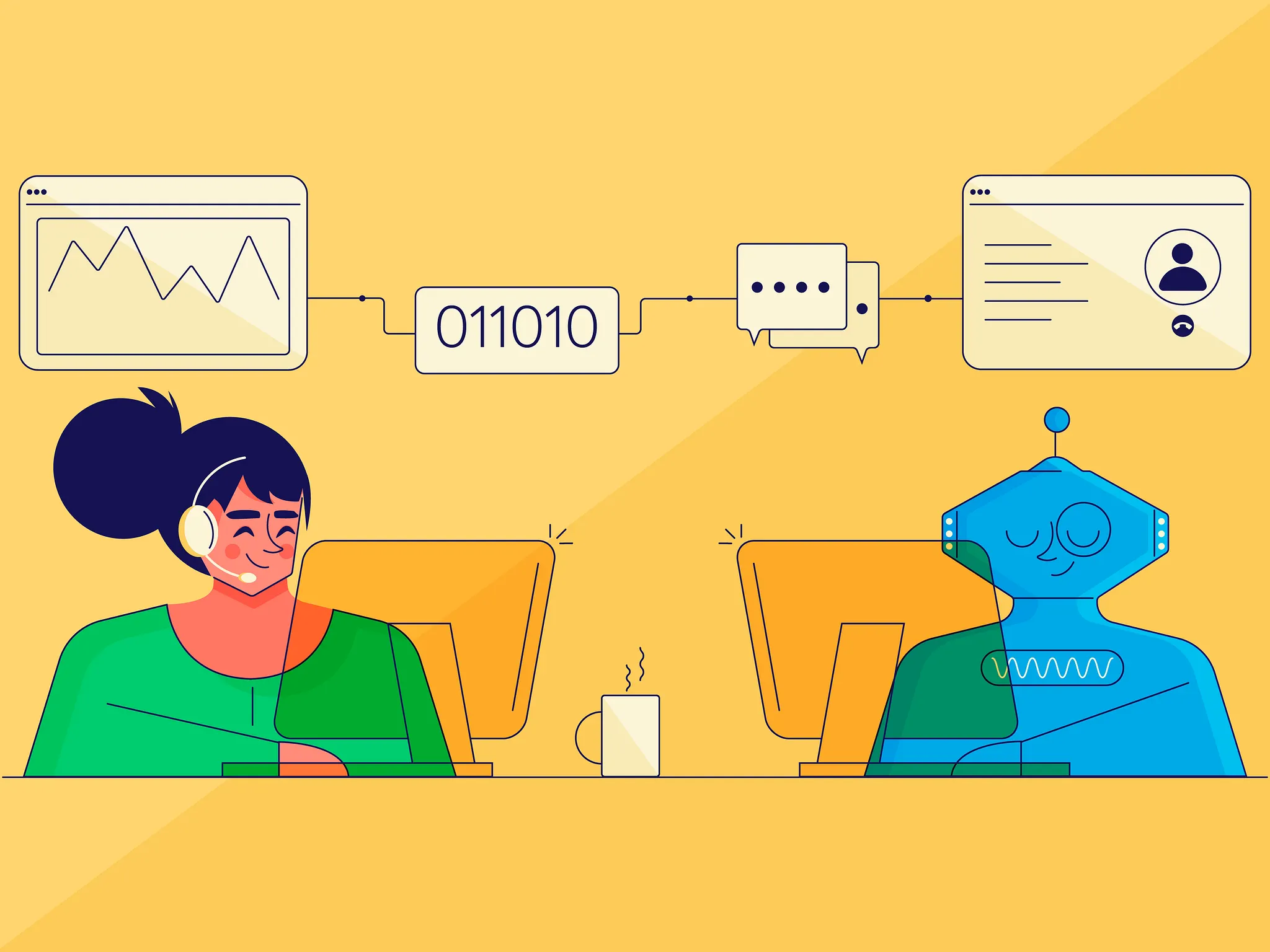
The hidden cost of manual processes isn’t in your budget. It’s in how your team spends their Tuesday morning.
Look at the last job posting you put out for an operations coordinator or an office manager.
Somewhere in that description, you listed things like “update and maintain spreadsheets,” “compile weekly reports,” “coordinate data between teams,” and “manage records and documentation.” You wrote those requirements because that’s what the role actually involves. You probably didn’t add up what those tasks cost you at the salary you’re paying.
Operations coordinator roles in the US currently pay $56,000 to $88,000 per year. Call it $70k. Add benefits, taxes, and employer overhead, and you’re at around $90,000 to $95,000 in total cost. That’s roughly $46 an hour for every working hour that person is in the building.
Now ask yourself: how many of those hours go toward tasks that software could handle automatically?
Not all of them. A good ops coordinator is doing things that genuinely require judgment, communication, and problem-solving. But in most businesses I’ve worked with, somewhere between 30% and 50% of their week goes to work that shouldn’t require a human at all: copying data from one place to another, building the same report from the same sources every Friday, chasing approvals over Slack because there’s no system to route them automatically, answering “where are we on X?” because there’s no live view of status.
At 40%, that’s $38,000 per year, per person, in salary spent on work that a piece of software could do in milliseconds.
The reason it persists isn’t that business owners are oblivious. It’s that the cost never shows up in a single line item.
Nobody invoices you $38,000 for “manual processes this year.” You see a salary that feels normal. The spreadsheet updates happen. The reports get compiled. The team looks busy. You don’t really notice the cost because it spreads across tons of little tasks that seem harmless on their own.
What you’re actually paying for is speed and reliability on low-value work, when what you hired that person for was judgment on high-value work.
The shift from a 10-person company to a 40-person company almost always follows the same pattern. At 10 people, everyone has full context. Communication is informal. A little manual work is fine because someone with full business knowledge can course-correct immediately if something’s wrong. At 40 people, the informal systems break. Three different people are now updating the spreadsheet that one person built and understood perfectly, but none of them knows why certain cells are formatted the way they are. The Friday report that used to take 20 minutes now takes three hours because the data lives in more places. Nobody scheduled this problem. It accumulated.
We wrote about this pattern in more detail here when internal tools start breaking at 50 employees.
If this sounds like your team — talk to us →
To make this concrete, here are four specific examples of work I see regularly that fall into this category.
Blomma, an e-commerce company we worked with in Kuwait, was spending 44 hours per month on account reconciliation. Not 44 hours in some abstract “we spent time on admin” sense. Forty-four hours, every month, of a real person’s working time, manually pulling numbers together from multiple places and cross-checking them. After we replaced that process with an automated reporting system inside their custom operations platform, it dropped to 2 hours per month. The full breakdown is in their case study.
That’s 42 hours recovered, every single month, from one process.
Major, a Spotify analytics agency, had a manual reporting process that was consuming 80% of their team’s available time. Every new client they brought on meant more manual data collection, more spreadsheet management, more hours. They weren’t scaling, they were adding people to keep pace with the work the work was creating. When that cycle breaks, it doesn’t break quietly. It breaks because someone eventually calculates what growth actually costs at current margins, and the number is wrong. See how we fixed it here.
PrepLadder, an ed-tech company with over 5 million users, was running four separate tools for sales, Support, and marketing coordination. When Sales closed a deal, Support didn’t get the customer details automatically. When Marketing ran a campaign, Sales had no live view of new leads. People weren’t sharing information badly because they didn’t care. They were sharing it badly because the systems required manual transfer for information that should have moved automatically. Missed deadlines, duplicated effort, and a support team unable to clearly see performance data made it difficult to respond to spikes in ticket volume. Read the case study.
This one doesn’t have a named client because it happens at almost every company I talk to. Someone, usually a senior ops person or an account manager, builds a status update every Monday morning by pulling information from a project management tool, a CRM, maybe a shared spreadsheet, and a Slack thread they have to dig through. It takes 90 minutes to two hours. It has been taking 90 minutes to two hours every Monday for the past year. Nobody has questioned it because the report is useful, and it gets done. What nobody has calculated is that 90 minutes, 52 Mondays a year, at a $55k salary, is about $2,600 per year for one report from one person. If three people build similar reports, you’re at nearly $8,000 annually for reports that could be generated automatically in seconds.
Manual workflows don’t start as bad decisions. They start as practical ones.
When you’re at 15 people and moving fast, building a proper system for expense approvals feels like overkill. You have three people submitting expenses. Someone reviews them on Fridays. That works. The problem is that “that works” becomes the system, and then you add 10 more people, and then 15 more, and at no point does someone pause and rebuild the process to match the current scale. The process that worked with 15 people is now running with 45 people using the same spreadsheet and the same Friday review, but it takes three times as long, has a backlog, and occasionally loses things.
This is how smart teams end up in a position where a significant fraction of their paid working hours go to tasks that a $300/month software investment could eliminate.
I’m not saying your team is inefficient. I’m saying your processes haven’t kept pace with your growth, which is a different problem. Efficiency is about effort. This is about design.
You don’t need a formal audit to find where manual work is eating your payroll. Three questions tend to surface it fast.
If someone being out of the office for a week causes a visible drop in output or creates a backlog of things that need catching up, there’s a manual process running through them that shouldn’t depend on a single person. The tasks that accumulate when someone is away are exactly the tasks that should be automated.
If your team enters an order in one system and then manually updates a separate spreadsheet to reflect it, that’s a broken connection between two tools that should talk to each other. Every manual re-entry is a cost (time), a risk (errors), and a signal that your systems aren’t designed to work together.
New employees are excellent at spotting processes that don’t make sense. They haven’t been conditioned to accept them yet. If you asked your most recent hire what surprised them about how the team operates, their answer points directly to your most expensive manual workflow. People who have been in the business for two years stopped seeing it.
The fixes are usually not as large as they feel. Companies delay addressing manual processes because they imagine it means rebuilding everything at once. It doesn’t. It usually means identifying the one or two processes that account for the majority of wasted time and replacing those first.
Most of the time, this involves creating a single internal tool. This tool connects the data sources your team already uses, eliminates the need for manual data transfer, and provides the relevant people with a live view of what they need. Not a system overhaul.
The Blomma reconciliation problem was 44 hours per month. That’s not a company-wide operations failure. It was a single process, handled by a single team, that needed to be automated. We built one platform that replaced six disconnected tools. That sounds big, but the reconciliation fix was the most valuable single piece of it, and it could have been built in isolation.
If you’re not sure where to start, look at what your operations coordinator is doing between 9 am and 11 am on a typical day. Whatever is happening in that window is your answer. Not because those are the unimportant hours, but because that’s when most teams run their recurring admin processes. The tasks that happen every day, at the same time, from the same sources, and produce the same output, are exactly the tasks that shouldn’t require a human.
Which process is eating the most hours in your business right now?
Bring it to a 30-minute call. We'll tell you whether it's a software problem or an operations problem — and if it's software, roughly what fixing it costs.
Himanshu runs NocodeAssistant, a development agency that builds internal tools and SaaS products for growing companies. He's worked directly with every client since 2019 — same person from kickoff to post-launch.
Connect on LinkedInWork with us
30 minutes to map your biggest manual bottleneck and what automation costs.
Continue reading
Discover the cost of hiring a Bubble agency for your business. Find out what influences the price and see a real SaaS example by a Bubble agency.
Agency or full-time developer? For SMBs building custom internal tools, the right answer depends on project scope, budget, and ongoing support needs.
The tools that got you to $5M are slowing you down at $15M. Why growing SMBs keep broken systems running and what it actually costs them.